Đồng Hới Before the Beach Wakes
A morning at Nhật Lệ, breakfast with my parents, and the odd feeling of returning to a hometown that carries on without me.
 John Le · Jun 16, 2024 · 10 min read
My father knocked on the door before five. He didn't ask whether I wanted to go to the beach. He said the kettle was on, which in our house can mean several different things, including that a plan has already been made for you.
I was home in Đồng Hới for a short visit. My wife had stayed in Hanoi, where we live, and I had promised to call after breakfast. The night before, I had told my parents I wanted a quiet morning. Apparently this was compatible with waking up in the dark.
Outside, the air was still warm. My father carried a small towel over one shoulder. I checked my phone for the time, then put it in my pocket because he had already started walking towards the gate. He paused to make sure I had pulled it shut properly.
There are parts of returning home that I can describe easily: the road towards the sea, the smell of breakfast cooking, my mother's voice from another room. The harder part is the brief sensation that I ought to know everything here, followed by some ordinary detail proving that I don't.
The road I remembered differently
I had remembered the road as a sequence of landmarks from childhood. One shop had changed its sign. Another place I expected to see was now something else. My father knew the changes well enough that they didn't require comment until I asked.
When I return to Đồng Hới, I sometimes speak as if the city has been waiting between my visits. My parents have been buying vegetables, seeing neighbours and living through whole stretches of weather while I have been busy elsewhere. A new sign is a small reminder of all that unobserved time.
My father pointed out a house where someone we knew had repaired the roof. I asked about an old school acquaintance. He wasn't sure of the answer. I had expected him to hold the entire town's updates on my behalf, which was a rather demanding service to request before dawn.
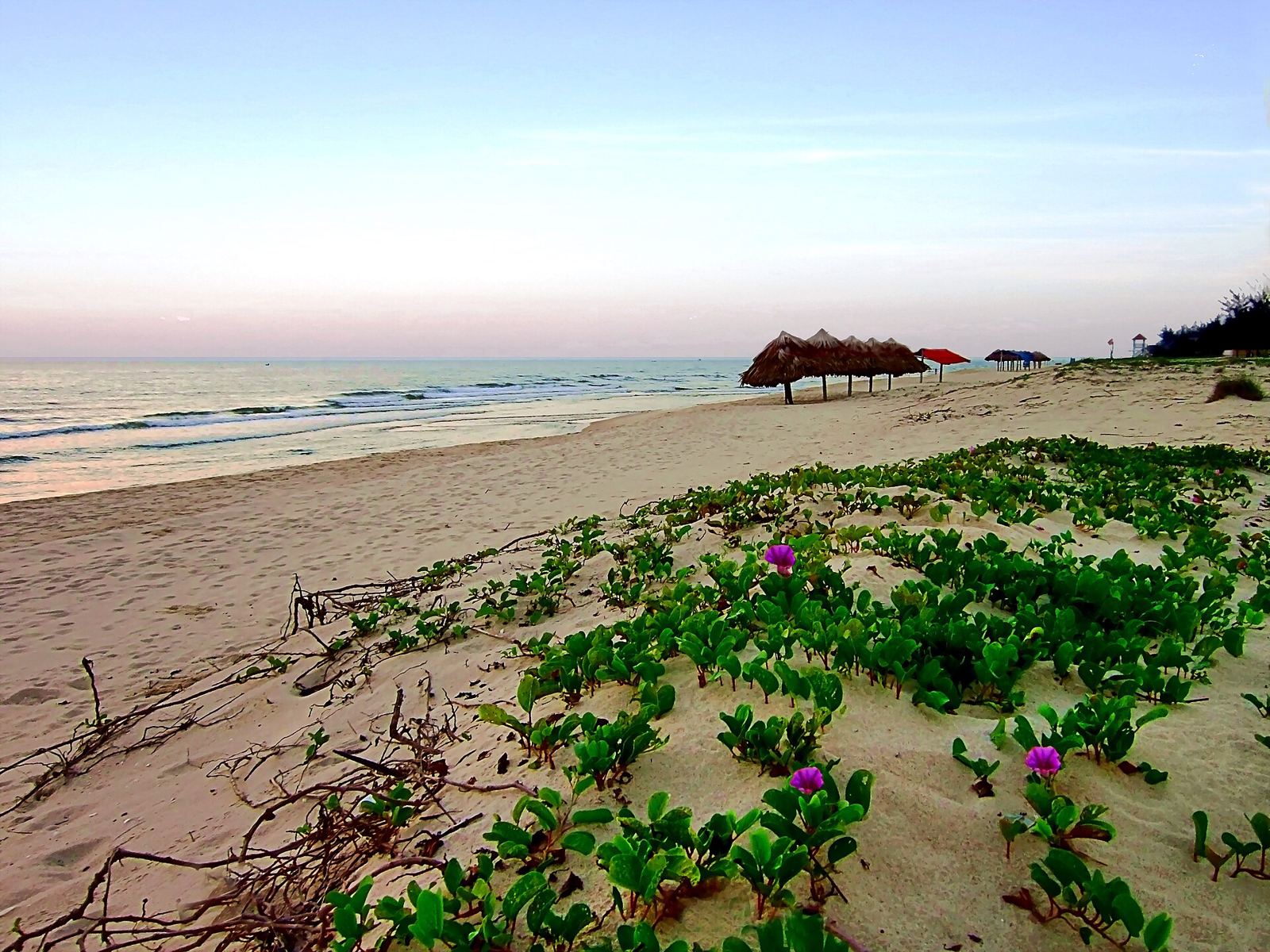
Near the beach, the darkness was thinning. A few people were already out. Someone was doing slow stretches. Another person stood facing the water with a towel around their neck. The sea was visible first as movement and sound, then gradually as a surface with colour.
We stayed near the shore and walked. I hadn't come prepared for a swim, and my father didn't make a project of persuading me. He put his sandals where he could see them and tested the wet sand with one foot.
The sand was cooler than the road. A small piece of shell pressed into my heel, and I stopped to remove it. My father kept going for a few steps before looking back. It was a familiar arrangement: him moving at a steady pace, me interrupted by something I had decided needed immediate attention.

The sea without an announcement
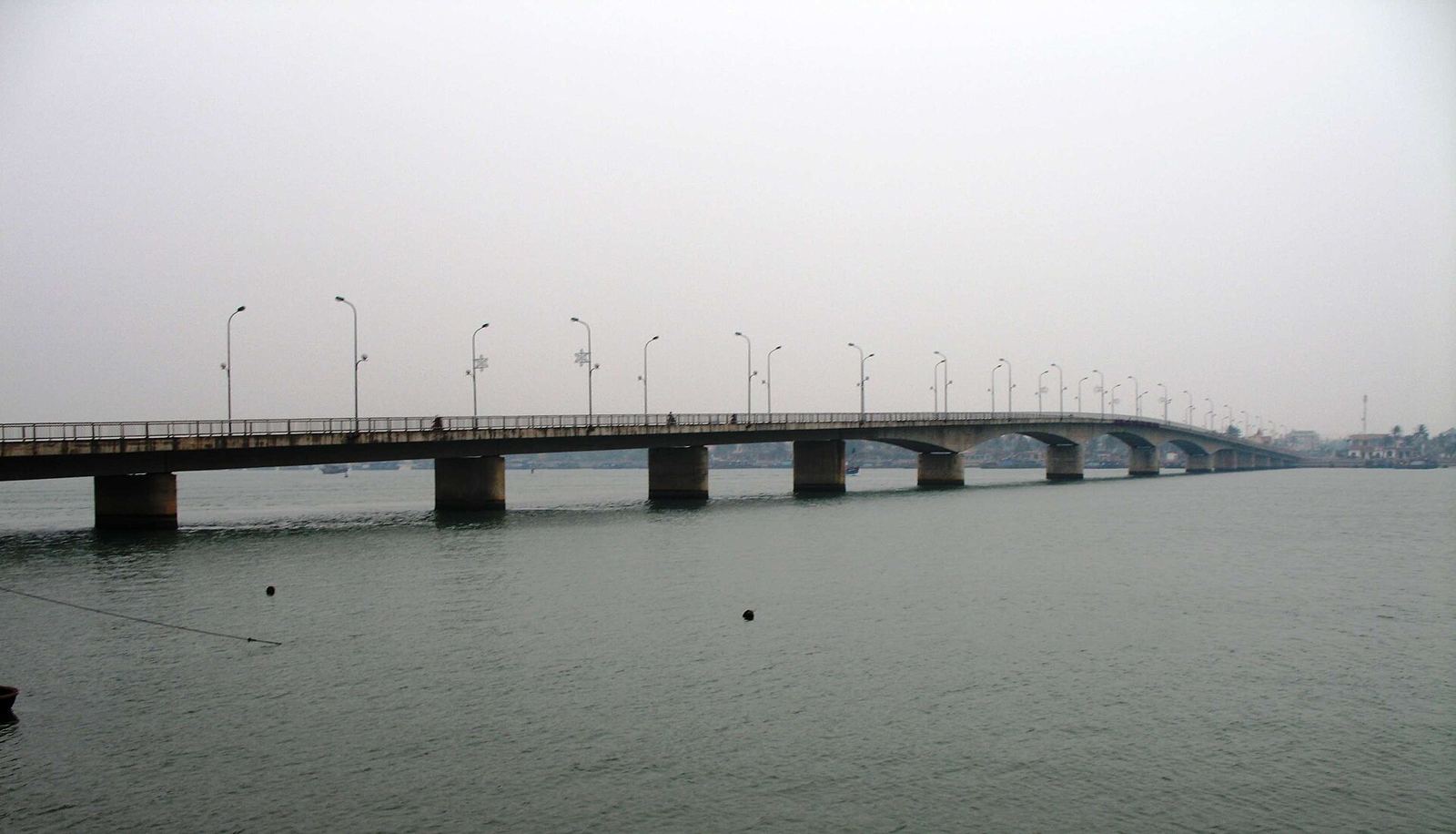
Nhật Lệ isn't a dramatic personal discovery for me. I grew up in Đồng Hới. The name belongs to ordinary conversations as much as to holiday plans. People can discuss going there in the same tone they use for buying bread.
That familiarity can make me inattentive. I have spent time looking carefully at rivers in Russia while treating the water near home as a background I already understand. This morning I tried to look without relying entirely on the picture I had carried from earlier visits.
The horizon was pale and uneven with cloud. Closer in, small waves changed the shape of the dark wet strip along the beach. A plastic bottle lay farther up the sand. I picked it up and carried it until we found somewhere appropriate to leave it. The beach didn't become less beautiful because the bottle was there, but the bottle didn't become invisible either.
My father stood for a while with his hands behind his back. I wondered what he was thinking and considered asking. Then he pointed out that I had sand stuck to the side of my leg. The conversation returned to an accessible subject.
I took one photograph, checked it and put the phone away. The picture flattened the light. I considered taking another, but we were walking again. I liked the fact that my father hadn't paused his morning to supervise my attempt to save it.
Your mother will say we went out and forgot breakfast.
He said this as if breakfast were an appointment with a person who would otherwise leave. We turned back. I had spent years learning to arrange my own time, and there was still something reassuring about a morning organised around my mother's expectation that we would be hungry.
On the road away from the beach, the shops looked more awake. A woman was moving chairs into place. A delivery motorbike stood with its load leaning slightly to one side. The day had started while we were looking at the water, without needing us to acknowledge the transition.
Breakfast takes a while
My mother asked whether the sea had been nice. My father said it had been ordinary. I said it had been nice. She accepted both reports and asked which bowl I wanted.
We ate breakfast at home. There were small plates that I remembered from before I moved to Hanoi, though I couldn't say whether every plate was actually the same one. I recognised a chipped edge and immediately began constructing a history for it. My mother said she thought that chip was recent.
I asked about a dish I remembered eating as a child. She said we could have it later if I bought one of the ingredients. I had arrived with the vague desire to revisit familiar things and was pleased to receive a concrete errand instead.
During university in Hanoi, I used to describe food from Quảng Bình with the confidence of someone who missed it. The descriptions were probably more definite than my actual knowledge. At home, recipes varied with what my mother had bought and how much time she had. The household version was less fixed than the version I carried away.
My father finished first and went to rinse his cup. My mother told him to leave it. He rinsed it anyway. This small disagreement has survived more changes in my life than several important plans.
I called my wife after we had eaten. She asked whether my parents were well, then asked whether I had remembered the thing she wanted me to bring back. I had not forgotten the request, but I had not yet done anything about it. I explained this distinction carefully and received the silence it deserved.
My mother came closer to the phone to say hello. Their conversation became a practical exchange about the journey home and whether the bag had enough room. I sat beside them, no longer required to summarise either household for the other.

An errand in the heat
Later in the morning I went out for the ingredient my mother had requested. The sun had become much less forgiving. I regretted wearing the shirt I had brought from Hanoi because I had chosen it for packing neatly rather than for this particular errand.
At the shop, someone recognised me as my parents' son before I recognised them. I answered the usual questions about where I was living and whether work was going well. There is a short version of adult life that can be delivered while someone counts change. I gave that version.
Then the conversation moved to my parents, and I learned about an ordinary visit they had made recently. Nothing important had happened. That was what made the detail useful. Their lives contained small outings that weren't always included in our calls because nobody considered them news.
I carried the bag home slowly, keeping it out of direct sun as best I could. The road had a different feel from the one I remembered at dawn. Motorbikes passed more frequently. A patch of shade under a tree had become a place worth altering my route for.
When I reached the house, my mother inspected the ingredient with the focused expression of someone who hadn't been certain I would buy the right thing. Apparently I had. She put it aside and asked me to move a heavy container before I sat down.
I had expected returning home to involve being looked after, and it did. It also involved being a conveniently available pair of arms. I moved the container and found that this was a more comfortable role than behaving like a guest who required entertainment.
My father asked whether I could look at a small problem with his phone. The problem turned out to be a setting he had changed without remembering when. I fixed it, showed him the steps and watched him repeat them. We used a scrap of paper to write the useful part down.
The room in the afternoon
After lunch the house grew quiet. My father rested. My mother put something away in a cupboard, then put it somewhere else because she had remembered a better place. I lay down in the room where I was staying and heard a motorbike stop outside a neighbouring gate.
In Hanoi, a free afternoon often fills with tasks I have postponed. Here, I felt briefly unsure what counted as a sensible use of time. I opened a book and read the same page twice. The heat, the early start and the sound of a fan made a persuasive case for doing less.
I thought about my three years in Moscow and how far away this room had felt then. Calling home across the distance had made me attentive to voices and careless about objects. I knew how my parents sounded. I couldn't always picture what they had moved on the table or planted near the house.
Now I was here and could see those details. A new hook beside the door held a hat. A container had acquired a replacement lid that didn't quite match. My mother had kept an old bag because it was the right size for a particular job. None of this belonged in a grand account of returning home, but it was the part I would miss when I left.
I slept for a short while. When I woke, my father was outside checking something near the gate. I joined him without asking whether there was a plan. We stood there discussing whether a loose fitting needed to be replaced. I held it while he looked for the right tool.
For ten minutes, I wasn't the son arriving from Hanoi or the person expected to have an update. I was the person holding a piece of metal steady. My father told me to turn it slightly. I turned it too far, and he told me to turn it back.

Packing too much again
That evening my mother began putting things aside for my return. I reminded her that the bag was small. She looked at the bag and continued. My wife had asked for one thing; my mother had interpreted the available space as a separate question.
I rearranged my clothes and found room for more than I expected. A shirt could be rolled around something fragile. The book could go in my backpack. I stopped pretending that my original packing arrangement was a carefully engineered limit.
Before bed, I checked the beach photograph. It was still an ordinary photograph of a pale morning. I sent it to my wife, who replied that she wished she had come this time. We talked about when we might visit together, without settling on a date.
My father asked whether I wanted to walk again the next morning. This time it was a question. I said yes, provided he didn't knock earlier than he had today. He looked mildly offended by the suggestion that his timing required negotiation.
I left my sandals beside the door and put a bottle of water where I would see it. From the kitchen came the sound of my mother fitting one more container into a bag. I went to see what it was, already knowing that the answer would require moving something else.
— John
Written on Jun 16, 2024 · Hanoi
John Le · I work with AI and data in Hanoi and write here for friends.
Keep reading
Two Days in Huế, Mostly on Foot
Rain on a notebook, an unhurried bowl of noodles, and a short visit that left room to call home.
Hanoi, Slowly: A Weekend as a Visitor in My Own City
Looking at Hanoi again before our daughter arrives: dawn by the lake, the new metro, a train to Ninh Bình, and flowers for my wife on 20 October.
My Father Took the Window Seat
A day in Phong Nha with my father, spent partly on the river and partly learning how little a full itinerary would have improved it.