Vietnamese Phrases for Travellers: The Ones You'll Actually Use (and Why "Xin Chào" Isn't One of Them)
Useful Vietnamese for visitors in 2026, sorted by where you'll need it: calling a waiter, ordering phở and coffee, haggling at a market, guiding a Grab driver. Includes how people really say prices, and why pronouns matter more than perfect tones.
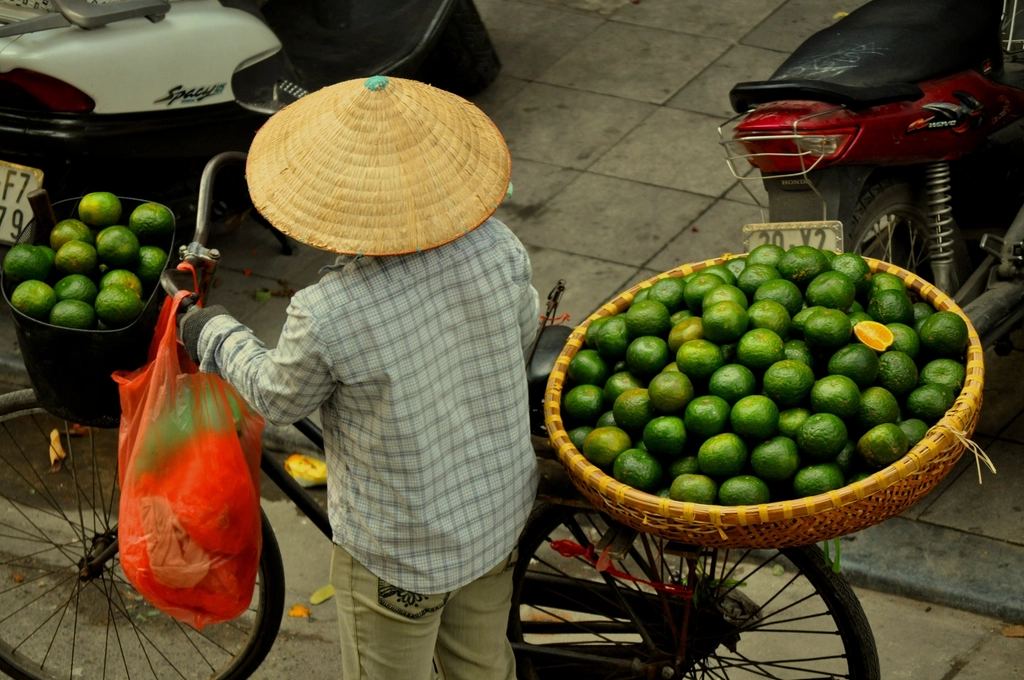
Every phrasebook starts with *xin chào*, and you'll hear it far less in everyday Hanoi than you'd expect. It's correct and polite, and right for formal situations, but at a noodle stall it sounds a bit like walking into a café and announcing "Good day to you". What people actually say is *chào* plus a word for the person: *chào anh*, *chào chị*, *chào em*. And that small word is the real key to sounding friendly in Vietnamese.
So here is the Vietnamese we'd teach a friend arriving next week, sorted by the moments they'll need it. The pronunciations are rough Hanoi-style guides, not linguistics. Vietnamese has six tones in the north, and you'll get some of them wrong. People will understand you anyway, especially if you point and smile.
Learn the pronouns first
Vietnamese has no neutral, all-purpose "you". Words like *bạn* exist, but with strangers people mostly use a family word that matches the other person's age compared with yours:
- anh (ahn): a man around your age or a bit older
- chị (chee): a woman around your age or a bit older
- em (em): anyone clearly younger, like a waiter in their twenties when you're forty
- cô (koh) / chú (choo): a woman or man about your parents' age
- bác (bahk): someone older than your parents
If you're unsure, go older. Calling a 30-year-old *chị* is polite. Calling a 50-year-old *em* is a mistake people will remember. Every phrase below sounds warmer with one of these words on the end.
Related reading: Vietnam SIM Card or eSIM for Tourists: Which Network, How Much, and Where to Buy · Renting a Room in Hanoi: What to Check Before You Pay the Deposit
Calling someone over
Em ơi! (em uh-ee) is how you get the attention of a waiter who is clearly younger than you, said loudly enough to be heard over the scooters. It isn't rude; it's normal. If they look your age or older, use anh ơi or chị ơi, and cô ơi or chú ơi for an older stallholder.
At a food stall
- Cho mình một bát phở bò. (chaw ming moht baht fuh baw): one beef phở for me. *Bát* is the northern word for bowl; in the south you'll hear *tô*.
- Không hành. (khohm hahng): no spring onion.
- Không cay. (khohm kai): not spicy. Useful in the centre and south, less needed in Hanoi.
- Ngon quá! (ngon kwah): really delicious. The one phrase every cook is happy to hear.
- Tính tiền. (ting tee-en): the bill, please. Combine it with *em ơi* and you're set.
Ordering coffee
- Cà phê sữa đá (kah feh suh-ah dah): iced coffee with condensed milk
- Cà phê đen (kah feh den): black coffee, usually sweetened unless you ask
- Ít đường (eet duh-ung): less sugar
- Không đá (khohm dah): no ice
Prices, the way people actually say them
This is the part phrasebooks skip, and it's the most useful. Nobody says "thirty-five thousand dong". They say ba lăm (bah lahm), literally "three five", and when you're talking about a price the thousands are usually dropped. Năm mươi is fifty, so 50,000. Một trăm is a hundred, so 100,000. In writing you'll see "35k" on menus and handwritten signs, meaning the same thing.
- Bao nhiêu tiền? (bow nyew tee-en): how much?
- Đắt quá! (daht kwah): that's too expensive. Say it with a smile at a souvenir stall, not at a phở shop with prices on the wall.
- Bớt đi được không? (buht dee duhk khohm): can you knock a bit off?
Bargaining is normal at markets and souvenir stalls, and pointless at places with printed prices.
In a Grab or taxi
Your app shows the route, but drivers often call to ask where exactly you are, or you'll want to stop a few metres earlier:
- Dừng ở đây. (zung uh day): stop here.
- Rẽ trái / rẽ phải. (zeh chai / zeh fai): turn left / right.
- Đi thẳng. (dee tahng): go straight.
If a driver calls and you don't follow, mình không nói được tiếng Việt (ming khohm noy duhk tee-eng vee-et), "I can't speak Vietnamese", and then a message in the app usually solves it.
Getting by
- Cảm ơn (gahm uhn): thank you. Cảm ơn chị is warmer.
- Không, cảm ơn. (khohm, gahm uhn): no, thank you. Repeat it, calmly, to persistent sellers.
- Xin lỗi (sin loy): sorry, or excuse me when squeezing past.
- Không sao. (khohm sao): no problem, it's fine.
- Nhà vệ sinh ở đâu? (nyah veh sing uh dow): where's the toilet?
What we'd skip
Long sentences from a phrasebook, read slowly off a phone. People will answer at full speed and you'll be stuck. Short phrases plus pointing work better. For anything complicated, like allergies, directions to a specific alley or a problem with your room, type it into a translation app and show the screen. Write allergies down in advance, in Vietnamese, and keep that note on your phone.
The phrases that get the biggest smiles cost nothing: *chào anh*, *cảm ơn chị*, *ngon quá*. Say those every day and you'll notice the difference.
Written in October 2026. Pronunciation guides are approximate and based on the Hanoi accent; the south sounds noticeably different.
John Le · Hanoi local · writes about everyday costs and life in Vietnam. Spotted an outdated price? Tell us and we will update it.
Keep reading

Vietnam SIM Card or eSIM for Tourists: Which Network, How Much, and Where to Buy
Getting mobile data in Vietnam in 2026: what actually happens at the airport SIM counter, Viettel vs Vinaphone vs Mobifone, eSIM before you fly, typical tourist package prices, and the passport registration step.
Renting a Room in Hanoi: What to Check Before You Pay the Deposit
Renting a room or small apartment in Hanoi in 2026: typical prices by district, electricity rules, deposits, rainy-season flooding and the questions that save headaches.
Is Hanoi Safe? Traffic, Theft, Scams and Walking at Night
An honest local view on safety in Hanoi: violent crime is rare, but traffic, phone snatching and small scams are real. What to watch for, at night and as a solo traveller.