Bánh Mì Guide 2026: What's Inside, How to Order, Prices, and Hanoi vs Hội An vs Saigon
A practical guide to Vietnamese bánh mì in 2026: what goes in the sandwich, how to order without a menu, what it should cost, how the Hanoi, Hội An and Saigon styles differ, and the small habits that keep it safe to eat on the street.
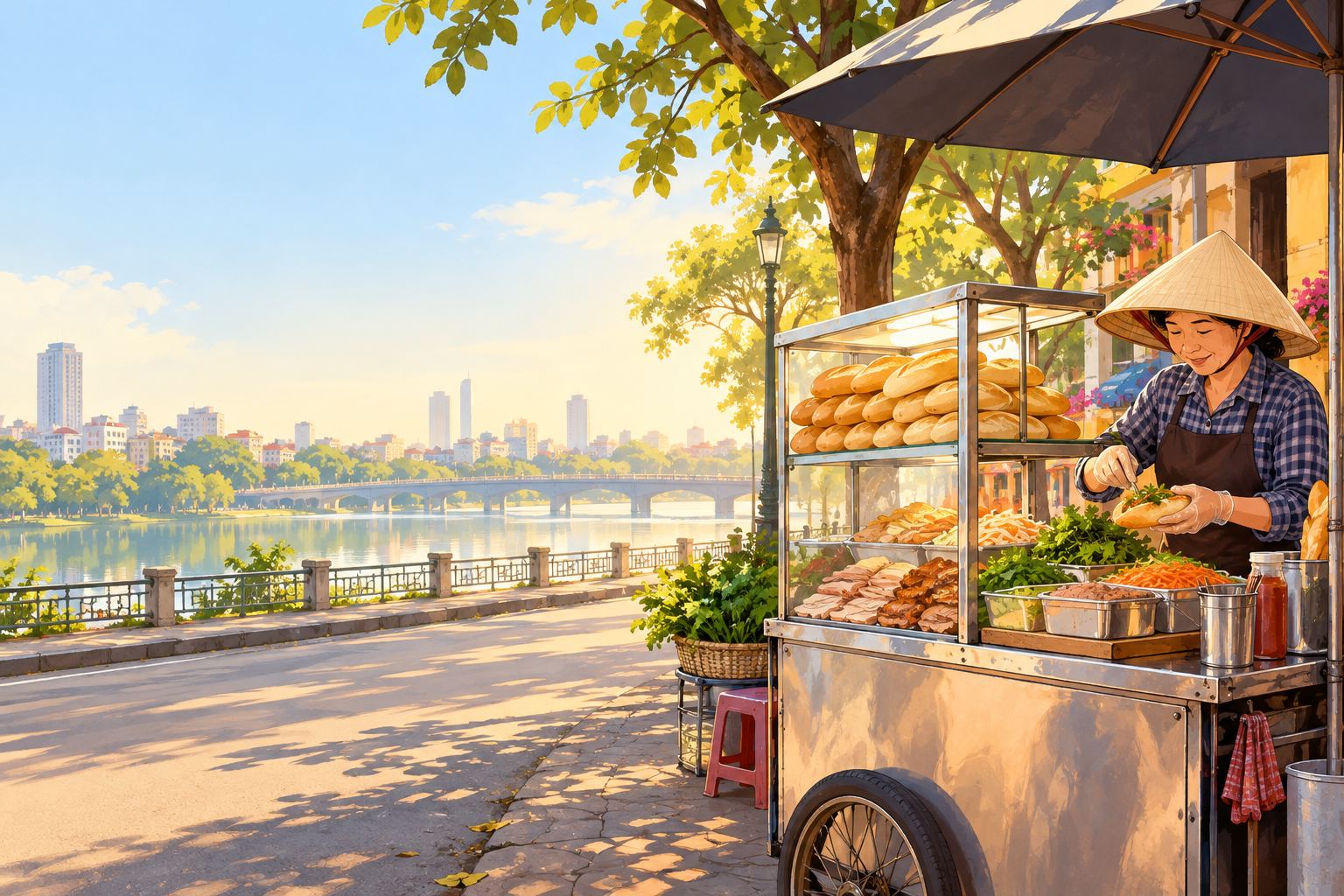
Picture a cart on the pavement at seven in the morning: a glass case of baguettes, trays of cold cuts and pickles, a jar of chilli sauce and a woman working faster than you can point. Office workers stop there on the way in, helmets still on, and ride off eating. What ends up in your hand depends on which city you're in, which cart you pick and what you say when you order.
The short answer
- A standard bánh mì costs roughly 20,000–45,000 VND in 2026. Street carts sit at the low end; famous Hội An shops sit at the top.
- The bread is a light, airy baguette with a thin crackly crust. The filling is usually pâté, butter or mayonnaise, cold cuts, pickled carrot and daikon, cucumber, coriander and chilli.
- You can order with your finger and one word: the name of the filling you want, plus "không cay" if you don't want chilli.
- Hội An is known for overloaded sandwiches with many fillings; Hanoi carts tend to keep it simpler; Saigon sits in between with a long list of combinations.
Related reading: Bún Chả in Hanoi: What It Is, How to Eat It, and What It Should Cost (2026) · Vietnamese Coffee Guide: What to Order, What It Costs, How Locals Drink It
What's actually inside
Most carts build the sandwich in the same order. The baker splits the warm roll, spreads pâté on one side and butter or a home-made mayonnaise on the other, then adds the meat: slices of chả lụa (pork roll), ham, roast pork, grilled pork, or a fried egg. Pickled carrot and daikon go on top for crunch and sourness, then cucumber, coriander and a few slices of fresh chilli. Many carts finish with a splash of soy or Maggi seasoning.
The common names you'll see on a cart sign:
- bánh mì thịt: "with meat", usually the cart's standard cold-cut mix
- bánh mì trứng: fried egg, often cheaper, a breakfast favourite
- bánh mì xíu mại: soft pork meatballs, often in a tomato sauce; some places serve the bread on the side for dipping
- bánh mì pate: just pâté and herbs, the cheapest option
- bánh mì chay: vegetarian, usually tofu or mushroom; ask, because the pâté and sauce may still not be vegetarian
How to order without a menu
Many carts have no printed menu, only a hand-painted list. Point at the trays you want and say the main filling, for example "bánh mì thịt". Two phrases help a lot: "không cay" (no chilli) and "không rau" (no herbs). If you see something you don't recognise, it's normal to ask "đây là gì?" (what's this?) and point.
Pay after the sandwich is in your hand. Small carts often prefer cash or a local QR code, so carry small notes: a 50,000 VND note for a 25,000 VND sandwich is fine, but a 500,000 VND note at seven in the morning may leave the seller hunting for change.
Hanoi vs Hội An vs Saigon
Hanoi. Carts here often keep the filling modest and the bread crisp. You'll see more pâté-and-cold-cut sandwiches and fewer extras. Many Hanoi carts heat the bread over charcoal or a small oven right before filling it.
Hội An. The town built a reputation on loaded sandwiches with more fillings and a richer sauce. The best-known shops, such as Bánh Mì Phượng on Phan Châu Trinh and Madam Khánh on Trần Cao Vân, list most sandwiches between about 30,000 and 40,000 VND on their 2026 menus. Queues form at lunchtime and in the late afternoon; mid-morning is calmer.
Saigon. The southern style uses a slightly larger roll and a long menu of combinations, from grilled pork to fried egg with cheese. Late-night carts are common, so it's easy to find a bánh mì after ten o'clock.
If your route takes you through all three cities, eat one in each and make up your own mind.
Eating it safely on the street
Bánh mì is one of the safer street foods because most of the filling is cooked or pickled. Pick a cart with a steady queue, so the trays get refilled through the morning, and one with a glass case over the meat. If your stomach is still adjusting in the first days of a trip, skip the raw herbs and ask for the bread toasted. And eat it soon: the crust goes soft within half an hour, which is half the point gone.
How much to expect in 2026
A plain egg or pâté sandwich from a neighbourhood cart is often around 15,000–25,000 VND. A mixed meat sandwich is usually 25,000–35,000 VND. Famous shops in tourist areas charge around 35,000–45,000 VND, sometimes more for extras like cheese or extra meat. Prices printed in guidebooks a few years ago will look low; check the sign on the cart before you order.
FAQ
How much does a bánh mì cost in Vietnam in 2026?
Roughly 20,000–45,000 VND. Neighbourhood carts are at the low end, and well-known shops in Hội An or tourist streets are at the top.
What do I say to order a bánh mì without chilli?
Say "bánh mì thịt, không cay". "Thịt" is the standard mixed meat filling and "không cay" means no chilli.
Is bánh mì safe to eat on the street?
Generally yes. Most fillings are cooked or pickled. Pick a busy cart with covered trays, and skip raw herbs if your stomach is sensitive.
Is there a vegetarian bánh mì?
Yes, ask for "bánh mì chay". Check that the seller leaves out the pâté and fish-based sauces.
Last checked: 24 October 2026. Check the price on the cart's sign before you order.
Sources
- Hội An Day Trip: Bánh Mì Phượng guide and menu (2026)
- Hội An Day Trip: Madam Khánh guide and menu (2026)
- Authentik Travel: best bánh mì addresses in Hội An
Read next
John Le · Hanoi local · writes about everyday costs and life in Vietnam. Spotted an outdated price? Tell us and we will update it.
Keep reading
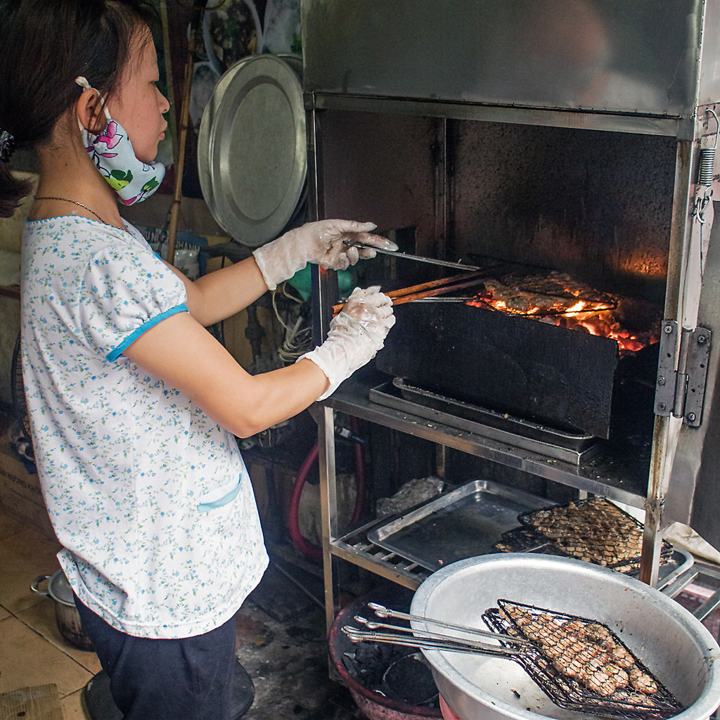
Bún Chả in Hanoi: What It Is, How to Eat It, and What It Should Cost (2026)
A local guide to bún chả, Hanoi's grilled pork noodle lunch: what arrives at the table, how to eat it without looking lost, what a bowl costs in 2026, the extras worth ordering, and how to pick a good place by the smoke.
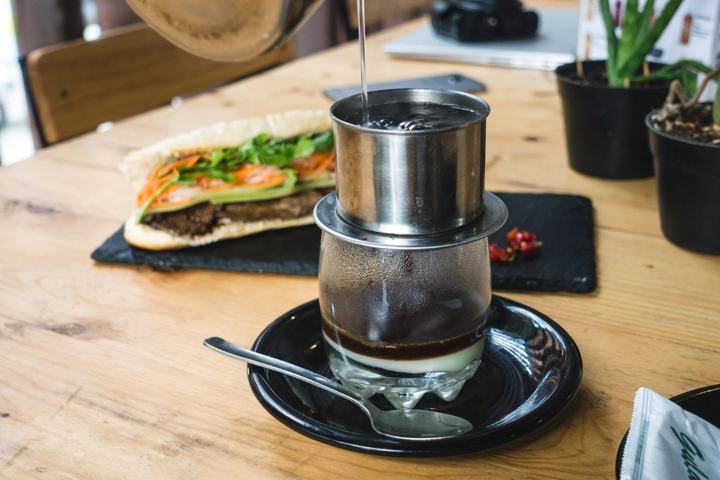
Vietnamese Coffee Guide: What to Order, What It Costs, How Locals Drink It
A Hanoi local's guide to Vietnamese coffee in 2026: cà phê sữa đá, đen đá, bạc xỉu, egg coffee, coconut and salt coffee, with real price ranges and ordering tips.
Hanoi Street Food Etiquette: How to Order, Sit, Pay and Not Get Overcharged
How street food works in Hanoi, told through one bún chả lunch: finding a stool, ordering without a menu, iced tea, wet towels, paying, typical 2026 prices, and the small manners locals notice.