Vietnamese Coffee Guide: What to Order, What It Costs, How Locals Drink It
A Hanoi local's guide to Vietnamese coffee in 2026: cà phê sữa đá, đen đá, bạc xỉu, egg coffee, coconut and salt coffee, with real price ranges and ordering tips.
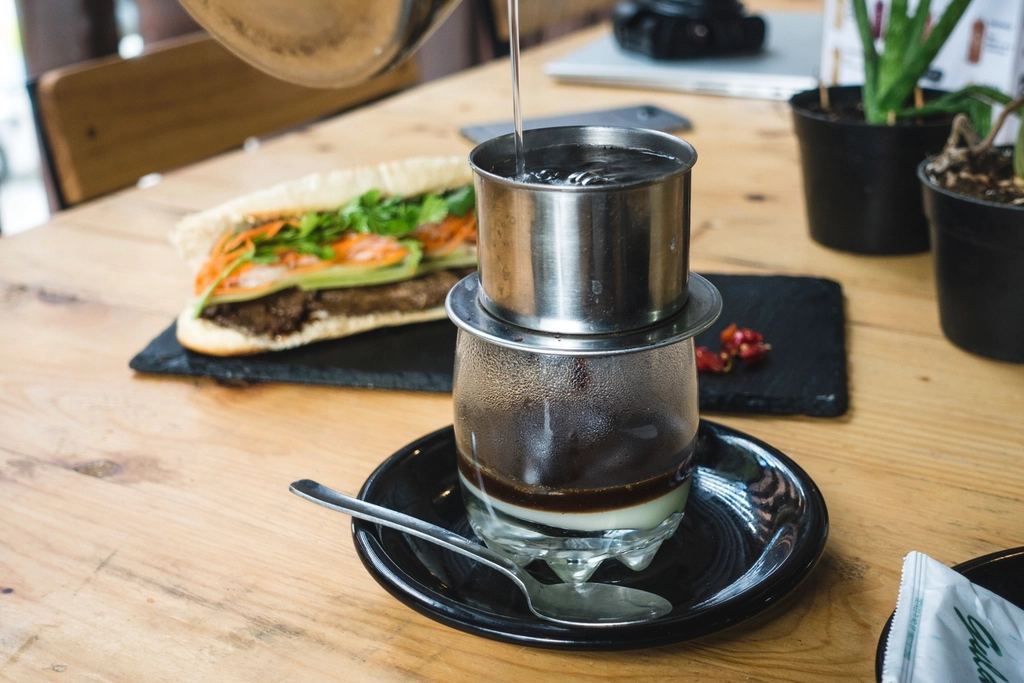
The first coffee of the day in Hanoi often costs less than a dollar and comes with a plastic stool that is far too low for your knees. You sit facing the street, a small aluminium filter drips slowly into a glass of ice, and you watch the city wake up. Nobody is in a hurry, which is funny, because the coffee is strong enough to make you one.
What's in the glass
Most Vietnamese coffee is robusta, roasted dark and brewed through a phin, a little metal filter that sits on top of the glass. It is bitter, heavy and very caffeinated. That is why so much of it is drunk with condensed milk and ice.
- Cà phê đen đá: black coffee over ice. 15,000–30,000 VND at a stall. Ask for sugar on the side if you want some.
- Cà phê sữa đá: the same coffee with sweetened condensed milk. 20,000–35,000 VND. If you only try one thing, try this.
- Bạc xỉu: mostly milk with a shot of coffee. Sweet, soft, a good starting point if robusta is new to you.
The drinks people come to Hanoi for
- Cà phê trứng (egg coffee): egg yolk whipped with sugar into a thick cream and spooned over hot coffee. It tastes like a coffee custard. Expect 35,000–60,000 VND, and more in cafés aimed at tourists around Hoàn Kiếm lake. The drink is usually traced back to Giảng café, which opened in the 1940s and still serves it.
- Cà phê cốt dừa (coconut coffee): coffee blended with coconut cream and crushed ice, closer to a milkshake. Chains like Cộng Cà Phê made it popular; 40,000–65,000 VND.
- Cà phê muối (salt coffee): coffee with a lightly salted cream on top. It started in Huế and has spread everywhere in the last few years.
Stall or café?
A pavement stall is where office workers grab a 7 am coffee before work. It's fast, cheap and you pay at the end; tell the owner what you had. Modern cafés cost 40,000–70,000 VND (specialty places charge more) and are where people go to work on a laptop for three hours, meet a client or wait out the rain.
Small things that help
- "Ít ngọt" means less sweet, "ít đá" means less ice, "không đá" means no ice.
- A glass of trà đá (iced tea) often comes free or for a couple of thousand dong at stalls.
- If you're sensitive to caffeine, one cà phê sữa đá in the afternoon can keep you up past midnight.
Prices checked in October 2026; tourist-area cafés can charge noticeably more.
John Le · Hanoi local · writes about everyday costs and life in Vietnam. Spotted an outdated price? Tell us and we will update it.
Keep reading
Hanoi Street Food Etiquette: How to Order, Sit, Pay and Not Get Overcharged
How street food actually works in Hanoi: tiny stools, pointing instead of menus, iced tea, wet towels, paying at the end, typical prices, and small manners locals notice.
Egg Coffee in Hanoi: What It Is, Where It Started, and How to Make It at Home
Cà phê trứng explained: the 1946 Hanoi story behind egg coffee, what it tastes like, hot vs iced, how locals drink it, and a simple recipe to make it at home.
How Hanoi Office Workers Eat Lunch for About $2
Lunch in Hanoi's office districts in 2026: cơm văn phòng, noodle shops, home-packed boxes and delivery, with real prices of 40,000–55,000 VND a meal.