Ten Minutes of Sitting Still
A year ago I started sitting by my window for ten minutes every morning, and I was bad at it. This is what changed in me, what didn't, and a letter for any friend who wants to try.
 John Le · May 12, 2024 · 12 min read

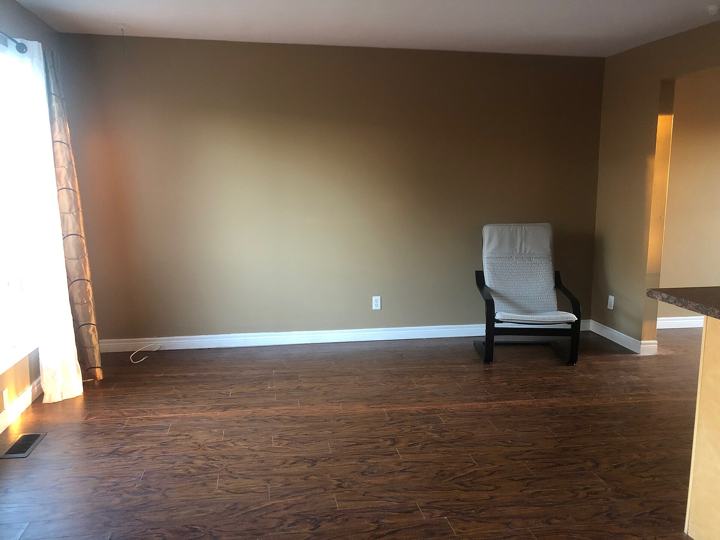
At ten to six the street under my window is already awake. Somebody is trying to start a motorbike that does not want to start. A woman pushes a cart of sticky rice past the building and calls out the same two words she has called every morning since I moved in. A bus sighs at the corner. I sit on a grey cushion by the window, set a timer on my phone for ten minutes, put it face down, and close my eyes.
My wife is usually still asleep in the next room. The flat is just the two of us, but I used to start making enough noise for a family of six: kettle, cupboard, spoon against a cup. Now I leave the tea things ready the night before. She says this may be the most convincing evidence that the sitting is helping.
That is the whole practice. I have done it most mornings for a year now, and I want to write down what happened, partly for friends who have asked, and partly because I am already forgetting how it felt at the start.
Back home in Đồng Hới, my mother puts fruit on the family altar on the first and fifteenth of each lunar month. She still does, in the house in Quảng Bình where my parents live. I moved to Hanoi for university and came back in 2021 after my years in Moscow. Before last May, sitting quietly by a window hadn't become a habit in either city. I work in AI, which in practice means nine or ten hours a day of screens and messages that begin with "quick question". I came to this because I was tired.
The first week, I was terrible at it
It started last May. Work was bad in an ordinary way. We had a model that kept failing in production for reasons nobody could explain, and I had begun waking at three in the morning to check the work chat on my phone. One night I caught myself lying in the dark, reading a message from my manager and writing the reply in my head, and I thought that I had turned into a notification with a body attached.
So I tried the thing everyone recommends and almost nobody does. I found an old video of Thích Nhất Hạnh talking about breathing, watched about four minutes of it, and decided I understood. The next morning I sat on the floor on a folded blanket and set the timer.
At minute one my nose itched. At minute two my left knee started to complain. By minute three I was thinking about the bug. I was rewriting the data loader in my head, line by line, and feeling rather pleased with myself. Then I remembered I was supposed to be breathing, felt guilty, and tried to breathe in a very correct way, which is a strange thing to do with your own lungs. I opened one eye to look at the timer. Four minutes and twelve seconds. I could not believe it.
That first week I fell asleep once, sitting up, and woke with my chin on my chest and the alarm going. On the fifth day I skipped because I "didn't have time", which meant I spent the same ten minutes scrolling in bed.
The instruction I had half heard in the video was simple. Breathe in and know you are breathing in. Breathe out and know you are breathing out. When the mind runs off, notice it and come back. I kept treating the running off as a failure. Every time I caught myself thinking about work, I tried to push the thought out and do better. It was tiring, like trying to sweep water.
Somewhere in the second week, on a morning with a lot of traffic, something moved a little. I was listening to the motorbikes and noticed that I wasn't trying to stop them. They came from the left, got loud, and faded away to the right. I did not run down the stairs to follow each one. I just heard them.
I wondered if thoughts could be like that. A thought about the data loader came from the left, got loud, and went. Another one came. I didn't have to ride each one to the end of the street.
I could not stop the motorbikes outside my window. I could only stop chasing every one of them.
This is still the most useful thing I have learned: noticing without fixing. The itch on my nose, if I leave it alone for half a minute, usually disappears by itself, which I find faintly insulting. The knee settles if I shift once, slowly, without drama. The worry about work does not go away, but it stops being the only thing in the room.
Washing the bowl to wash the bowl
There is a passage in Thích Nhất Hạnh's small book on mindfulness that I keep going back to. He says there are two ways to wash the dishes. You can wash them in order to have clean dishes, or you can wash them in order to wash them. If you stand at the sink thinking only about the cup of tea waiting for you afterwards, you are not really alive while you wash. And when you finally sit down with the tea, you will probably drink it thinking about something else as well.
The first time I read it I thought it was sweet and a bit impractical. I have a lot of dishes. I want them done.
Then one Sunday I went for phở at a small shop near my flat, the kind with low plastic stools and a huge pot of broth steaming by the door. The owner asked "Tái hay chín, em?", rare or well done, the way she always does. I said tái, sat down and took out my phone, the way I always do. I read two news articles and half a discussion about a new language model. When I looked down, the bowl was more than half empty. I had no memory of the first half. I had paid forty-five thousand đồng for a bowl of phở, and some distracted version of me had eaten it on my behalf.
The next Sunday my wife came with me, and I left the phone in my pocket. Honestly, it was harder than the cushion. My hand kept drifting to the pocket by itself, like a dog that wants to go out. But I ate the bowl. I noticed that the first spoon of broth is always too hot and that I always try it anyway. I noticed the lime was sharper than I remembered. I noticed the old man at the next table eating very slowly, blowing on each spoonful, reading nothing. He had probably been doing this practice for seventy years without calling it anything.
I don't do this at every meal; most days I eat lunch at my desk like everyone. But one bowl a week without the phone has become a small holiday.
Walking around the lake
After a few months my knees asked for a break, so on some evenings I started walking instead of sitting. There is a small lake ten minutes from my flat. It is not a famous lake. It has a concrete edge, a few benches, a man selling balloons after dark, and a group of aunties who dance to the same four songs at seven o'clock.
The way I learned it, you walk more slowly than usual and let your steps follow your breath, two or three steps on the in-breath, two or three on the out-breath. Thích Nhất Hạnh often said that with every step you have already arrived, so there is nowhere you need to hurry to. I don't fully believe that yet when I am late for a meeting. On the lake path, though, it makes sense.
The first evening I tried it, an aunty doing her arm swings watched me for a whole lap. I think she thought I was injured, or drunk. On the second lap she called out, "Cháu ơi, có sao không?" Are you all right, nephew? I told her I was fine, just walking slowly. She nodded the way older Hanoi people nod when they have decided young people are getting strange. Now we greet each other. She has never asked again.
Walking slowly changed what I saw. When I used to jog there, I saw the path and my heart rate. Walking, I saw the light on the water go from silver to orange. I saw that the trees on the north side lose their leaves first, and I have no idea why.
I sometimes remember to slow down at an ordinary red light, with both feet on the ground and my hands resting on the handlebars. Then the light changes and I go. I don't always remember at the next one.
The pause before I press send
The biggest surprise was that sitting made the most difference at work.
I used to be fast. A message arrived and I answered within a minute, and I was proud of that. The trouble is that my fastest replies were often my worst. A product manager would write at six in the evening, "Why did the accuracy drop again?", and my fingers would be typing a defence before I had finished reading the question.
Thích Nhất Hạnh wrote about letting the telephone ring a few times before picking it up, breathing while it rings, so that when you answer you are actually there. I turned that into a small rule. When a message makes my chest go tight, I take my hands off the keyboard. I breathe in and out once, sometimes three times. Then I read the message again, slowly, as if someone I like had written it.
Most of the time the second reading is a different message. "Why did the accuracy drop again?" becomes a worried person asking a fair question at the end of a long day. My reply gets shorter and kinder, and more useful too. I have deleted a lot of sentences in that pause. One of them started with "As I already explained". Nothing good in the history of offices has started with "As I already explained".
A colleague noticed before I did. In a meeting around February, after I answered a fairly rude question quite calmly, she sent me a private message: "Dạo này anh hiền thế." You've become so gentle lately. I think it was a compliment. I felt a little offended for about ten seconds, then noticed I was offended, and that was funny enough to let go.
What changed, and what didn't
Sleep got better, but it isn't fixed. I fall asleep faster, maybe because I have practice at letting thoughts pass instead of arguing with them. I still wake up at three on some nights. The difference is that I lie there and feel my breathing instead of reaching for the phone, and about half the time I drift off again.
Anger hasn't gone anywhere. I still get angry in traffic, and at the neighbour's karaoke on Saturday nights, which is always the same song from 2009. What changed is the gap. Between the moment the anger arrives and the moment I do something with it, there is now a small space, sometimes a second, sometimes a whole breath. In that space I can sometimes choose not to use the horn. Sometimes I use the horn anyway.
Attention is the change I notice most. I can read a long article without opening three other tabs. I can listen to my mother tell a story I have heard before and actually hear it, including the parts she changes every time.
What did not change: I still procrastinate. I still check my phone first thing on bad mornings. I did not become calm in the way monks in photographs look calm. According to the note on my phone, I skipped about forty days since last May, including nine in a row during a release in December. None of the mornings I managed felt especially impressive. Most mornings my mind wanders, I come back, and it wanders again.
There is an old word my mother uses without thinking: vô thường, impermanence. Everything that arises also passes. I used to hear it as a sad word, something people said at funerals. Sitting every morning has made it feel more practical. The itch passes, and so does the bad mood. The lovely calm sit, the one where I think I am finally getting good at this, passes too, usually by the next morning, when I spend all ten minutes planning a slide deck. Knowing this makes it easier not to grip so hard, on bad mornings and on good ones.
After a year I still get angry. I just notice it about one breath earlier.
A letter for a friend who wants to start tomorrow
A few friends have asked me how to begin, and I always get awkward and give a speech. So here is a letter instead.
Dear friend,
The grey cushion came from my mother in Quảng Bình. I told her on the phone that I was sitting on an old folded blanket. Two weeks later she sent a small parcel on the overnight coach from Đồng Hới, tied up with string and my name written twice. My wife collected it with me. There was dried fish in the bag as well, separately wrapped, because my mother doesn't send anything to Hanoi without something to eat.
You can start with the blanket. Pick a few minutes you actually have, sit comfortably, and leave the phone beyond easy reach. Mine goes behind the curtain. If I can see it, I can invent a reason to check it.
I let my breathing do what it is already doing. When I notice I've spent a while somewhere else, I come back. Some mornings that happens before the first minute is over. I stopped keeping count.
On days when I don't sit, I sometimes remember while washing a bowl or waiting for the kettle. There are plenty of opportunities to spend half a minute where my feet are. I still miss most of them.
If you stop for a while, you can begin again without writing yourself a speech about discipline. I have done that often enough to be sure.
Tomorrow my wife has an early start. I'll put her cup beside mine tonight, close the cupboard carefully, and sit by the window before I turn the kettle on.
— John
Written on May 12, 2024 · Hanoi
John Le · I work with AI and data in Hanoi and write here for friends.