Happiness Is a Small Room
Almost thirty, I keep finding that the happiest parts of my life are small and repeatable, like tea with my father on Sunday and a plate of fruit after dinner. Some notes on chasing numbers, learning what "enough" feels like, and an evening by West Lake.
 John Le · Nov 30, 2025 · 12 min read
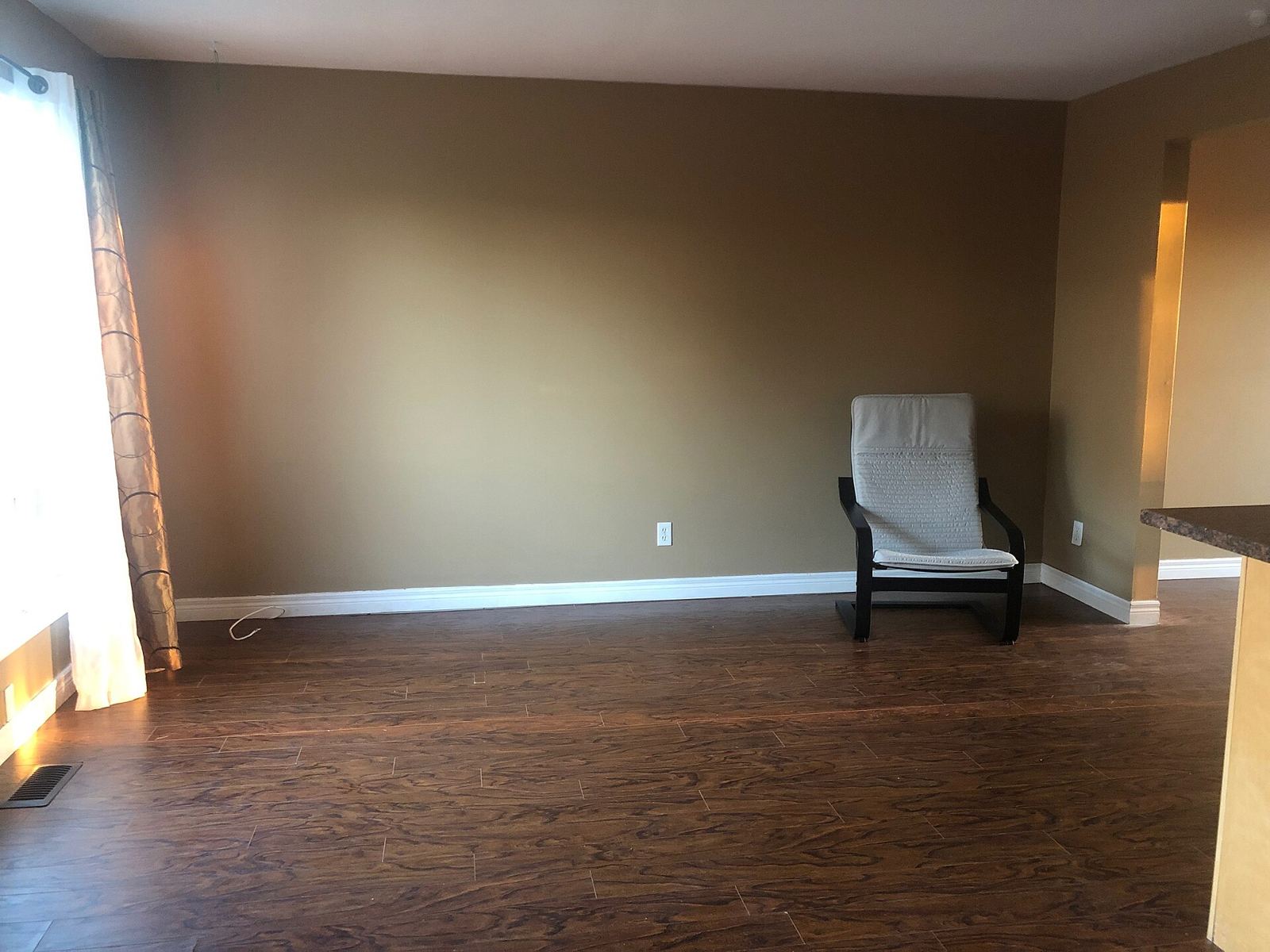
My father makes tea the same way every Sunday morning. He boils water in the old kettle with the yellowed handle, pours a little over the clay pot and the four small cups to warm them, then tips that first water into a plastic basin under the balcony table. Then a pinch of leaves from a tin with "Thái Nguyên" printed on the side. Then he waits. He never looks at a clock. I think he knows from the smell.
My parents have come up from Quảng Bình to stay with us for a few months and help with our daughter. Their own house is still in Đồng Hới; here, my father has adopted our small balcony and found a place for the teapot. Most Sundays I get out there early enough to catch the first pot. This morning was the first properly cold Sunday of the year. The neighbour's bird was singing across the alley. My father poured, pushed a cup toward me with two fingers and said, "Drink it while it's hot."
"I know, Bố."
"You always let it go cold. Then you drink it cold and say it's bitter."
He's right. I let it go cold because my phone sits next to the cup and part of me is always waiting for it to light up. Today I went back inside, left the phone on the shoe shelf by the door and came out again. My wife was on the mat with our eleven-month-old daughter, who was trying to pull herself up by my trouser leg. I stayed for a minute while she considered letting go, then returned to the tea with a damp patch on my knee. My father saw this and said nothing, which in our family counts as a long speech.
We talked about whether the bird across the alley is a chào mào. My father says yes. I suspect he's guessing. After that we didn't talk for a long while, and the tea was very good.
I turned twenty-nine last month. Thirty is close enough now that relatives bring it up at weddings. And the thing I keep finding, almost against my will, is that a morning like this one is most of what I want from life. Written down, that sounds either wise or a little sad, and I'm not sure which.
One heater and a kettle
My parents were back in Quảng Bình when I started university in Hanoi. From my second year I shared a rented room in an alley in Cầu Giấy with Khoa, a friend from Nghệ An. It was on the top floor, under a tin roof. One January evening I rode home from tutoring with my gloves soaked through, and at the gate my fingers wouldn't close around the key. I remember thinking that my mother's kitchen in Đồng Hới was a very long way away.
We lived there for three winters, and they taught me what a warm room is worth.
The room had two thin mattresses on the floor, one desk, a wardrobe whose door never closed, and a second-hand fan heater that became the centre of our lives. We dried socks in front of it. Khoa swore that resting his feet next to it helped him remember formulas. It tripped the landlord's fuse if it ran with the kettle, so we switched it off for the three minutes the water took to boil. When you came in from the drizzle, peeled off the wet raincoat and shut the door behind you, the warmth hit so hard it almost hurt. Your fingers stung as the blood came back. Someone would hold up two packets of instant noodles and say, "Mì không?" and that was dinner.
Since then I've sat in much nicer places, including an office on the twentieth floor less than two kilometres from that alley. None of them felt like that room on an ordinary Tuesday night in January. One heater and a kettle were enough to make it warm, and I have rarely felt richer than I did in there, splitting noodles with Khoa and arguing about whose turn it was to wash the pot.
The number after the number
I work in data science. My job is mostly to make certain numbers go up and others go down, and after a few years of that you start to look at your own life as a dashboard.
When I started my first real job, I wrote a salary figure on a sticky note and put it in my desk drawer. It was the amount at which, I told myself, I would finally relax. Three years later an offer letter arrived with that number on it. I took my parents out for hotpot, and my mother ordered extra beef without asking the price, which for her is a wild act of celebration. The next morning I opened a job site and looked at what senior people were earning. The number had moved before I'd finished being happy about the old one.
Work supplied other numbers to chase. I once spent several evenings lifting a model's score by a fraction, then went straight to the next experiment before telling anyone the result. At home my wife asked whether the thing I'd been complaining about was finished. I said yes, almost. She asked what the new problem was. I had trouble explaining why I had made one for myself before dinner.
For a while I tried leaving a notebook on the table and writing down where I would start tomorrow. Closing the notebook was harder than writing the sentence. I kept remembering one more comparison to run. My wife would already be halfway through her rice while I stood in the doorway negotiating with a computer.
There is a word in the old Buddhist texts, taṇhā, usually translated as craving. I read once that its plain meaning is closer to thirst. That helped, because thirst is so ordinary. You drink, you're fine for a while, you're thirsty again, and you don't blame the water. I had been treating each target as the last drink I would ever need, then feeling cheated when the thirst came back on schedule.
Each target felt like the last drink I would ever need. Then I was thirsty again by Thursday.
My father has a saying for this, one that every Vietnamese person over fifty seems to know:
Biết đủ thì đủ, đợi đủ bao giờ mới đủ.
Roughly: if you know what enough is, you have enough; if you wait until you have enough, when will that ever be? He said it years ago when I was complaining about my salary, and I rolled my eyes, because it sounded like something off the tear-off calendar. Those calendars print a proverb on every page. To be fair to the calendar, a lot of them hold up.
Fruit after dinner
During this visit my mother cuts fruit after dinner in our kitchen. Back in Đồng Hới she does the same thing. Here she has to search our drawers for the knife she likes, and complains every evening that we've put it somewhere else. In November it's usually pomelo. She scores the thick skin into petals with a small knife, peels it open and strips the white membrane off each segment with her thumbnail. I have never once seen her hurry it. She lays the clean segments on the blue-rimmed plate, sticks toothpicks into two of them and slides the plate toward my father, my wife and me. She eats the ones that broke while she was peeling.
"Mẹ, why do you always eat the broken ones?"
"The nice ones are for you."
"We'd eat the broken ones."
"You'd eat them. You wouldn't enjoy them."
I had no answer to that, so I ate a nice one.
A couple of years ago I tried a gratitude app. For two weeks I typed "family, health, job" into it every night, with less feeling each time, and then I deleted it, as if I had failed an exam in being thankful.
What works better for me is smaller. I try to notice one thing properly while it's happening. The sound of my mother's knife going through pomelo skin, a soft tearing and then a click on the board. The smell that stays on her fingers for the rest of the evening. Most of my gratitude these days is just remembering, for half a minute, that I'm sitting at this table with the pomelo in front of me and nobody in a hurry. I don't write it down anywhere.
Things that don't last
Khoa lives in Saigon now, with a wife and a daughter who is almost two. Last week he called at eleven at night, sounding tired, and we talked for an hour about nothing, mostly the time we tried to make phở from frozen beef bones and kept the pot going on a camping stove for nine hours. At the end he said, "Mày vẫn thế nhỉ." You're still the same. I decided to take it as a compliment. I don't know how that kind of friendship is made on purpose. Ours was made by accident, in a rented room with one heater, and it doesn't seem to mind how rarely we call.
Bà nội, my father's mother, died in Quảng Bình during the season of my university entrance exams. I was in Hanoi for the exams when my father called. I took an overnight coach home to Đồng Hới with the papers still in my bag. At a stop before dawn I bought water and couldn't finish it. By the time I reached the house, she had been washed and dressed. For years I kept going over the timing, as if getting the hours right in my head could change anything. Nobody in my family blamed me. I supplied that part myself.
Last year, back in Quảng Bình for her death anniversary, I told my mother I wished I had come home sooner. She kept moving the offerings into place. 'Bà biết mà,' she said. Grandma knew. Then she handed me a plate of fruit to carry to the altar. I stood beside her until she needed me to move it again.
I'd like to say I forgave myself in that moment. It took longer, and it happened the way the Sunday tea gets made, through small repetitions. Anxiety still visits, mostly at two in the morning, with its usual questions. Am I behind? Will the new models do half my job in five years? I've stopped arguing with those questions. I answer them the way my mother answered me, without a debate, and then give myself something small to do, like drinking a glass of water.
On the first and fifteenth of every lunar month, my mother puts fresh flowers on the altar. By the fifth or sixth day they droop. As a teenager I asked her why she bothered buying flowers that died so fast. She gave me the look she gives anyone who asks why we cook dinner when we'll only be hungry again tomorrow. She says "vô thường", impermanence, about everything from a cracked bowl to the death of a neighbour, in the same flat voice, and as a boy I found that almost rude. I understand her better now.
This morning I watched my father's hands while he poured. There are brown spots on the backs of them, and a slight shake that wasn't there five years ago. He takes the stairs to the balcony more slowly too.
One day there will be one chair on that balcony instead of two. I can write that sentence now, mostly without my throat closing.
Writing it makes me want to leave my phone on the shoe shelf more often.
West Lake, after work
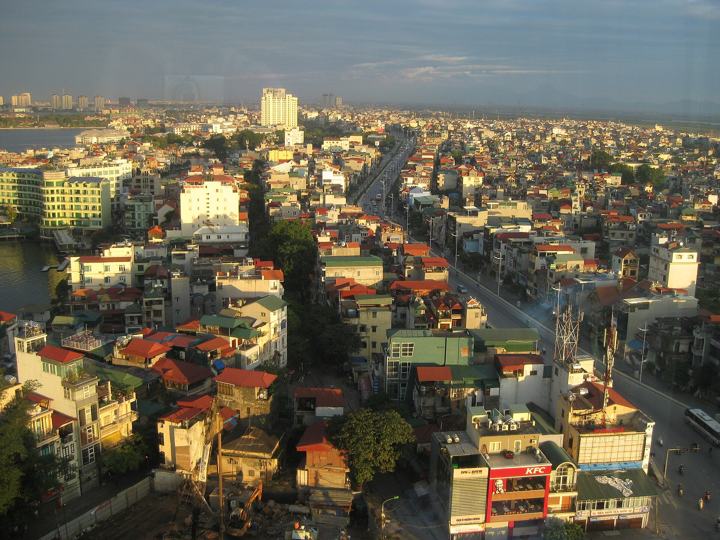
On Thursday I left the office early, which I almost never do, and rode to Thanh Niên road just as the sun was going down behind the far side of West Lake. I parked near Trấn Quốc Pagoda and sat on the low wall by the water. The air smelled of the last hoa sữa of the season and of corn a woman was roasting over charcoal nearby. Two men were fishing with long rods and a red bucket that stayed empty the whole time. A young couple was having wedding photos taken in the cold, the photographer shouting "Cười lên!" every thirty seconds.
I put my phone face down on the wall. At home I just follow my breath, but outdoors, with all that noise, I count. You count to ten and start again, and if you lose count you go back to one. I lost count at four, thinking about a broken pipeline at work, and at six, thinking about whether our daughter would still be awake when I got home. In half an hour I reached ten twice, which is about my average by the lake. Each time I lost count I tried to go back to one the way my father tips the first water out of the teapot, with no fuss, as part of making the tea.
The water went from silver to pink to a grey-blue. Lights came on in the cafés across the lake. A swan-shaped pedal boat tied up by the bank kept knocking gently against its neighbour. At some point I noticed I wasn't waiting for anything. I was sitting on a cold wall with cold hands, and it was enough.
When I was younger I pictured a bigger flat whenever someone asked what I wanted. I still wouldn't mind a kitchen with another drawer. But I know the rooms I keep returning to in my head: Khoa sitting beside the heater, my mother at the chopping board, my wife on the mat waiting to see whether our daughter would stand. I had stayed by the lake long enough.
I'd promised to be home for dinner, then sent my wife a message from the lake saying I'd be late. It was nearly eight when I got back to our flat. My father was asleep with his glasses on. My mother was washing up, and my wife was settling our daughter in the bedroom. On the table was a plate with a bowl turned upside down over it so the fruit wouldn't dry out. Underneath were six pieces of pomelo, all broken.
I took off my jacket and ate one. My mother looked over from the sink and asked if I wanted the rice warmed up. From the bedroom came a small, indignant sound, followed by my wife saying, "Your turn."
I put the plate on a high shelf, washed my hands and went in.
— John
Written on Nov 30, 2025 · Hanoi
John Le · I work with AI and data in Hanoi and write here for friends.